Mandy Croft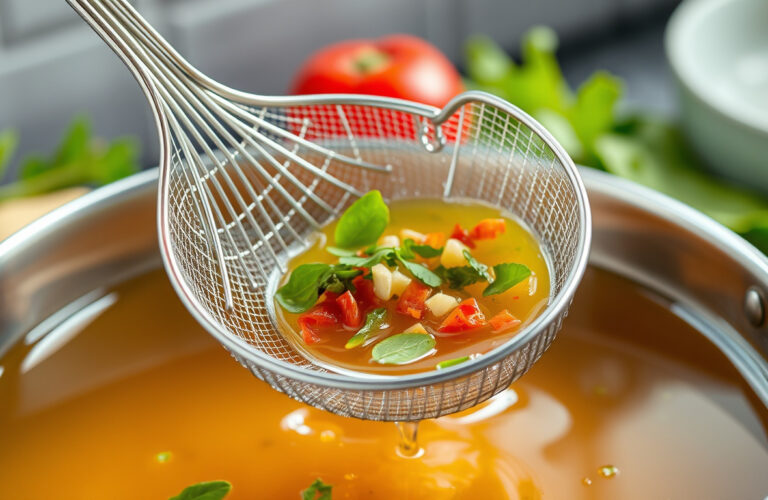
## How This Kitchen Utensil Works
A stainless steel mesh skimmer filters out unwanted particles.
The fine wire mesh catches tiny debris easily.
Liquid passes through without any trouble.
It is the best tool for deep frying and boiling.
What Is a Wire Skimmer?
A wire skimmer is essentially a handheld strainer with a fine or coarse wire mesh attached to a handle. It is designed to scoop unwanted particles, foam, and food debris from liquids such as hot oil, boiling water, soup stocks, and frying pans.
Wire skimmers come in various types, including:
- Fine Mesh Skimmers: Ideal for removing tiny particles such as burnt bits, scum, or fine debris from broths and oils.
- Coarse Mesh Skimmers: Better suited for lifting larger food items like blanched vegetables or fried foods.
- Material Options: Stainless steel, brass, nickel-plated steel, or tin-plated steel mesh, often combined with handles made of metal, wood, or plastic to protect your hands from heat.
The size and shape of the skimmer vary widely, ranging from small 3.25-inch diameters to larger 11-inch models, with handle lengths tailored for safety and convenience during use.
Why Use a Wire Skimmer?
Efficient Debris Removal
When cooking, unwanted materials often float to the surface—burnt residue, foam, scum, or small pieces of food that can affect the taste and appearance of your dish. A wire skimmer allows you to selectively remove these elements, keeping your stock or oil clean and enhancing the overall quality of your meal.
Safety and Convenience
Because many cooking operations involve hot oil or boiling liquids, reaching in with your hands is dangerous. A wire skimmer provides a safe distance between your hand and the heat source, minimizing the risk of burns or splashes.
Multi-Purpose Tool
Beyond debris removal, wire skimmers are indispensable for:
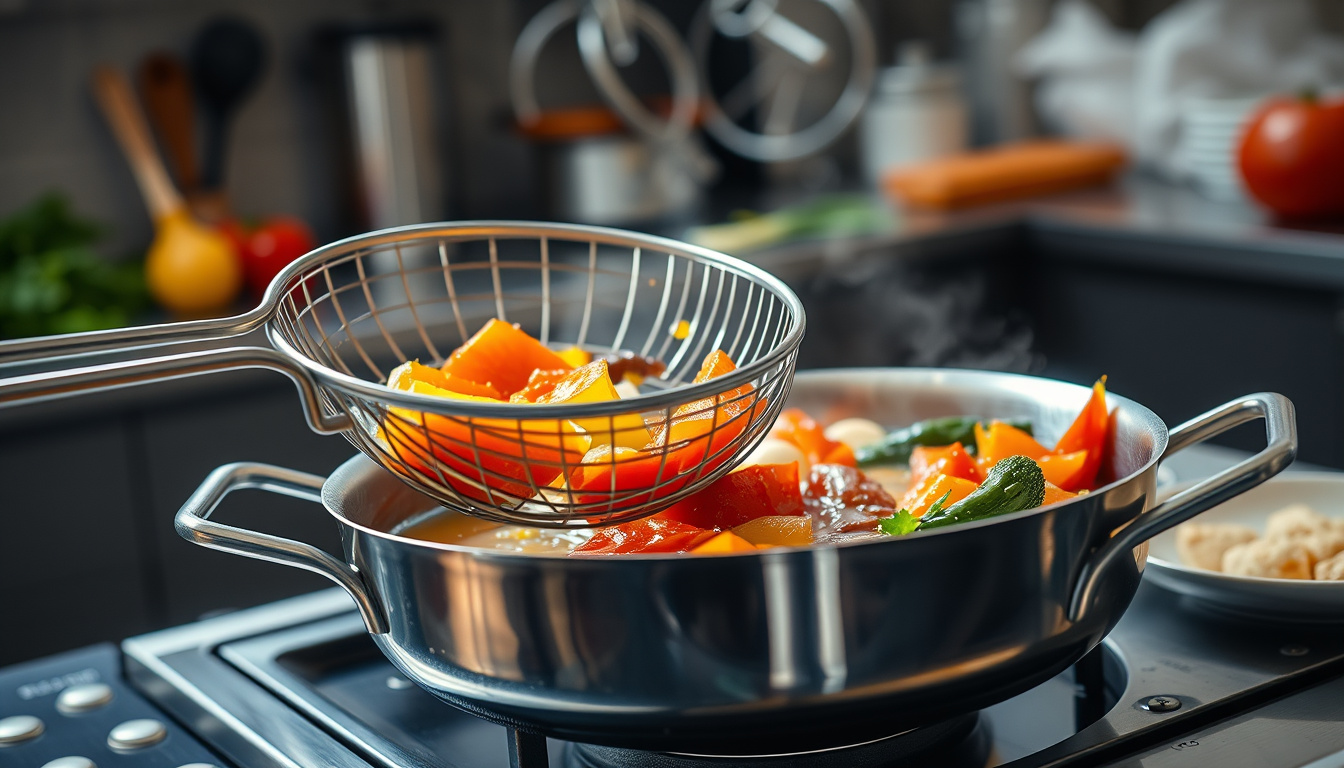
- Lifting and draining deep-fried foods.
- Blanching vegetables efficiently.
- Skimming foam from stocks and broths.
- Separating solids from liquids during cooking.
How to Use a Wire Skimmer Effectively
Mastering a wire skimmer is straightforward but knowing a few key pointers can elevate your precision and safety.
1. Choose the Right Skimmer for the Task
- For removing tiny floating debris or burnt particles, use a fine mesh skimmer.
- For scooping larger foods like fries or blanched vegetables, opt for a coarse mesh skimmer.
2. Prepare for Heat Safety
Always select a skimmer with a handle length sufficient to keep your hand safely away from hot oil or boiling water. Handles made from heat-resistant materials or with insulating covers are preferable.
3. Skimming Technique
- Hold the skimmer parallel to the liquid surface.
- Gently skim across the surface to collect floating debris.
- For deep-frying, submerge the skimmer slightly under the food, lift it, and let any excess oil drain back into the pan.
- Repeatedly remove surface debris during long cooking processes to maintain clarity and taste.
4. Cleaning and Maintenance
After use, rinse the wire skimmer thoroughly to remove any stuck food particles. For effective cleaning, occasionally soak the skimmer in warm soapy water and scrub gently. Make sure it is fully dry before storage to prevent rust on metal meshes.
Creative Alternatives and Related Tools
If you need to remove debris in other contexts such as pool maintenance or cleaning above-ground swimming pools, aquarium nets or fine mesh nets are frequently suggested as practical tools. These tools function similarly by scooping debris out safely without requiring direct contact.
Some useful tips derived from pool care enthusiasts include:
- Using small square aquarium nets made of stainless or plastic-coated mesh for fine debris.
- Having duplicate baskets or filters pre-fitted with debris-catching nets to swap quickly without contaminating filters.
- Utilizing long-handled skimmers or modified tools to gently stir and scoop debris.
While primarily designed for pools, these concepts translate well into kitchen settings where you want precision scooping of floating particles without the need to immerse your hands.
Conclusion
The wire skimmer is an indispensable tool for anyone serious about clean and safe cooking. Its ability to remove debris, scum, and unwanted particles ensures better-tasting dishes and a safer cooking environment. By selecting the appropriate skimmer for your needs and using it with the proper technique, you can effortlessly maintain the clarity and quality of your liquids, whether deep-frying, simmering stocks, or blanching vegetables. Embrace the art of clean cooking with a wire skimmer, and watch your culinary results reach new heights of perfection.
Remember, a clean cooking process not only delights the palette but also enhances kitchen safety and efficiency—your wire skimmer is your trusted companion in this culinary journey.