Mandy Croft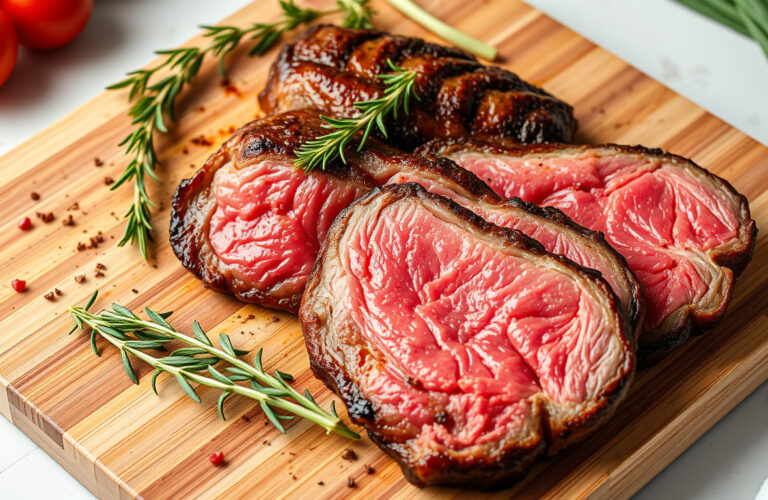
When it comes to cooking meat, achieving juicy, tender slices is a goal shared by both home cooks and professional chefs. A key step that influences the texture and flavor of your meat is resting it after cooking and before slicing. Although this practice is longstanding culinary wisdom, recent discussions and experiments have revealed nuances that help us better understand why and how resting meat works. Let’s explore the science and practical advice behind resting meat to unlock perfectly juicy slices each time.
What Happens When You Cook Meat?
Cooking meat involves heating its muscle fibers, which respond by contracting. This contraction pushes juices — primarily water, dissolved proteins, and fats — from inside the fibers outward, concentrating much of the moisture toward the center of the cut. If sliced too soon, these juices tend to gush out onto the plate, leading to a seemingly dry and less flavorful serving.
Why Rest Your Meat?
Traditional Explanation: Juice Redistribution and Reabsorption
The most common explanation for resting meat before carving is that it allows the muscle fibers to relax. As they loosen, the juices that were pushed to the center during cooking gradually redistribute back into the meat’s outer layers. This process is thought to minimize the liquid lost when sliced, preserving more moisture inside the meat and providing a juicier bite.
Science and Experimentation: A More Complex Picture
Though this explanation has guided cooks for decades, food scientists have conducted experiments that complicate this narrative:
-
Initial tests showed that rested meat releases less liquid when sliced compared to meat carved immediately after cooking, supporting the juice reabsorption idea.
-
However, subsequent studies have found that when meat is cooked and then sliced at the same final internal temperature, resting time does not significantly affect the amount of juice lost.
-
What resting does influence is temperature management: the meat continues to cook slightly after removal from heat in a process called carryover cooking, which raises the internal temperature by several degrees.
-
Resting also allows the inside and outside temperatures of meat to equalize, improving the overall texture and doneness consistency.
The Role of Carryover Cooking
Carryover cooking occurs because the outer layers of the meat remain hotter and transfer heat inward after removal from the heat source. Small cuts, such as steaks, may see a temperature rise of 3–6°F (1.5–3°C), while larger roasts can increase by 10–15°F (5–8°C) during resting. This natural warming is an important consideration — removing meat from heat a few degrees before the desired final temperature ensures it will reach the perfect doneness by the time slicing begins.
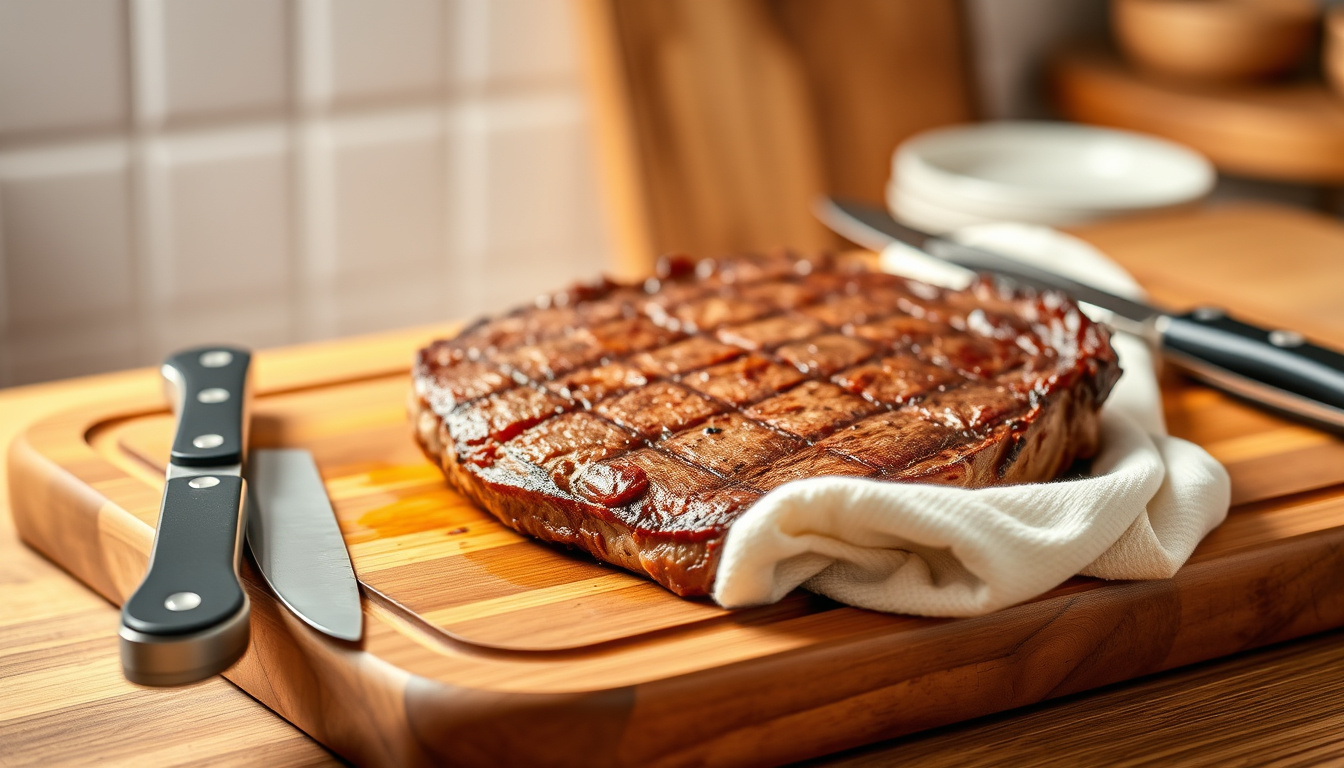
How Long Should You Rest Meat?
Resting time varies depending on the size and thickness of your cut:
- Thin cuts (steaks, chops): Rest for 5 to 7 minutes.
- Thick cuts and roasts: Rest 10 to 20 minutes.
- A useful rule of thumb is to rest meat for about 5 minutes per inch of thickness or about 10 minutes per pound.
During this time, the meat should be kept warm—usually by tenting loosely with aluminum foil—to prevent excessive cooling while moisture redistributes internally.
How to Rest Meat Properly
- Remove meat from the heat source (grill, pan, oven).
- Transfer to a warm plate or cutting board.
- Tent lightly with aluminum foil to retain heat without causing steaming, which can affect the crust or sear.
- Allow the meat to rest for the appropriate time based on its size.
- Slice and serve immediately after resting.
Does Resting Always Improve Juiciness?
While resting is generally beneficial for most cuts, it’s not the only factor that dictates perceived juiciness:
- The type of meat (beef, pork, lamb, etc.), fat content, and cooking method also play a role.
- Juiciness perception is influenced by more than just liquid retention — including melting collagen, fat rendering, and seasoning that promote salivation and mouthfeel.
- Some experts argue that if rested meat juices spill onto the plate, they can still be enjoyed simply by spooning them over the sliced meat.
- Resting helps maintain the texture of the crust on seared meats by preventing steaming, which can happen if sliced too soon.
Summary: Rest Meat, But Understand Why
Resting meat before slicing is crucial—not necessarily because it magically traps more juices inside, but because it allows carryover cooking to finish and temperatures to even out, leading to a better textured and more evenly cooked final product. Coupled with proper cooking techniques and timing, resting helps you serve meat that is juicy, tender, and flavorful.
Final Tips for Perfect Meat Slices
- Use a meat thermometer to monitor internal temperature and remove meat from heat a few degrees before your target doneness.
- Follow resting times proportional to the thickness and weight of the meat.
- Keep the meat loosely covered to maintain warmth without losing the desired crust.
- Slice against the grain to enhance tenderness.
- Don’t rush: good things come to those who wait—especially meat.
By embracing the science and art of resting meat, you can consistently slice into juicy, delectable cuts that impress every time.