Mandy Croft
## Master the Art of Stir-Fry: Why Round-Bottom Woks Rule
Want to cook authentic Asian dishes?
The secret is the shape of your pan.
A round-bottom wok changes everything.
It handles heat better than flat pans.
Your food cooks fast and tastes amazing.
Let’s explore why pro chefs love this tool.
The Role of Wok Shape in Heat Distribution
Traditional woks come primarily in two shapes: flat-bottom and round-bottom. Each has unique interactions with heat sources, especially considering modern cooktops like gas, electric, or induction.
Round-Bottom Wok: A Heat Conductor Extraordinaire
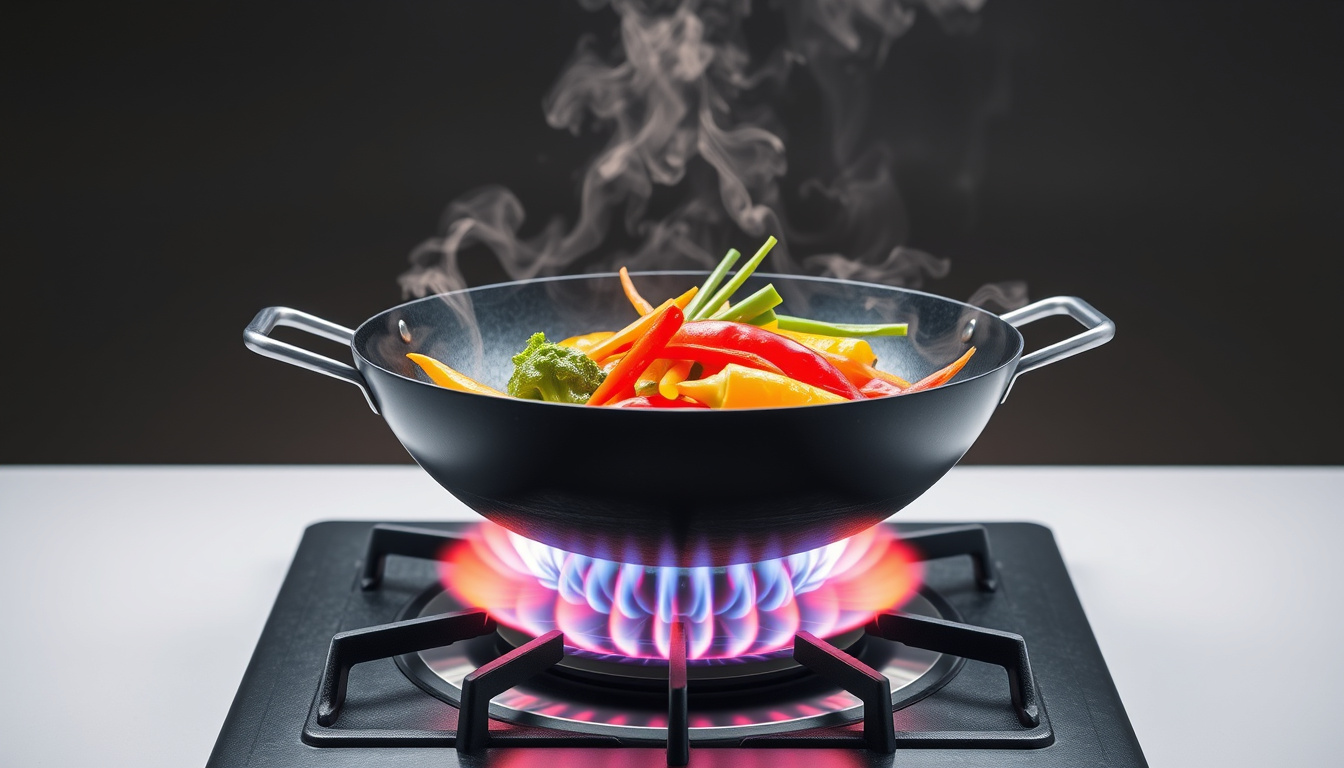
A round-bottom wok is characterized by its curved base, which naturally channels heat towards the deepest point at the center. This geometry provides several heat-related benefits:
- Concentrated Heat Zone: The rounded shape focuses the flame or heat source onto a smaller surface area, creating an intense searing zone—a hallmark needed to develop wok hei, or the “breath of the wok,” which imparts smoky, caramelized flavors.
- Even Heat Circulation: Heat rises up the curved sides, distributing warmth evenly around the vessel rather than concentrating solely at the flat base. This promotes even cooking and prevents food from burning in concentrated hot spots.
- Facilitates Tossing and Stirring: The curved interior enables food to roll and toss naturally along the wok’s walls, allowing for more fluid movements and better exposure to heat during stir-frying.
Flat-Bottom Wok: Versatility Meets Modern Convenience
Conversely, flat-bottom woks offer a broader contact area with stovetops, making them practical on contemporary flat cooking surfaces:
- Stable and Compatible: Flat bottoms provide stability across gas, electric, ceramic, and induction cooktops, which require flat contact for efficient heating.
- Broader Heat Surface: The heat spreads more gently across the entire base, enabling smooth transitions between high-heat searing and lower-heat simmering or steaming.
- Easier to Control: The more consistent base contact allows for better heat control without dedicated wok rings or accessories.
However, flat-bottom woks do not focus heat as intensely, which can make it harder to achieve the authentic sear and quick tossing motion traditional in Chinese stir-fry techniques.
Why Use a Round-Bottom Wok for Optimal Heat Distribution?
The round-bottom wok’s design has been perfected over centuries for cooking over open flames, where intense heat is readily available. Its shape maximizes heat concentration, which is vital for the key processes in wok cooking:
- High Heat Searing: The center receives direct, intense heat, perfect for rapidly searing meats and vegetables, locking in moisture, and creating a desirable crisp texture.
- Multi-Zone Cooking: As food moves within the wok, ingredients travel through various heat zones—from the searing hot base to the slightly cooler upper sides—allowing for gradual cooking and flavor layering.
- Quick Temperature Changes: Made typically from carbon steel, round-bottom woks heat up rapidly and respond instantly to temperature adjustments, enabling precise cooking control.
- Natural Food Movement: The rounded sides aid in the characteristic tossing and flipping techniques, which circulate food evenly, preventing sticking and burning.
Choosing the Right Stove for a Round-Bottom Wok
While the round-bottom wok excels in heat distribution, its effectiveness depends heavily on the cooking environment:
- Traditional Wok Burners: Designed with high flames and concave supports, these are optimal for round-bottom woks, allowing flames to engulf the wok sides for optimal heat infusion.
- Gas Stoves: Round-bottom woks can be used with gas burners, although they often require a wok ring to maintain stability. Without this, the wok can wobble, limiting even heat contact.
- Electric and Induction Stoves: These flat cooktops are generally incompatible with round-bottom woks due to uneven contact leading to inefficient heating and potential safety hazards.
If your kitchen features a traditional gas burner with a wok ring or a specialized outdoor wok burner, a round-bottom wok is your best bet for authentic, high-performance cooking.
Balancing Tradition and Modern Convenience
For many home cooks, flat-bottom woks are practical and versatile for everyday cooking on modern stovetops. Nevertheless, for those aiming to replicate traditional techniques and achieve superior heat distribution for stir-fries, a round-bottom wok remains unmatched—provided the right heat source is available.
Final Thoughts
Unlocking culinary mastery through stir-frying hinges on many factors, but cookware shape is foundational. A round-bottom wok’s superior heat distribution creates ideal conditions for intense searing, natural food tossing, and achieving that iconic wok hei flavor profile. While modern kitchens may dictate using flat-bottom woks for convenience, embracing a round-bottom wok where possible elevates your cooking to a new level of authenticity and deliciousness.
Summary: Benefits of Using a Round-Bottom Wok for Heat Distribution
- Concentrates heat at the wok’s center for intense searing
- Promotes even heat circulation along curved sides
- Enables traditional tossing and flipping motions
- Responsive to rapid temperature changes due to carbon steel construction
- Best suited for open-flame wok burners or gas stoves with wok rings
Choosing the right wok ultimately depends on your stove and cooking goals, but for the purest heat distribution and stir-fry experience, the round-bottom wok is a timeless choice.