Mandy Croft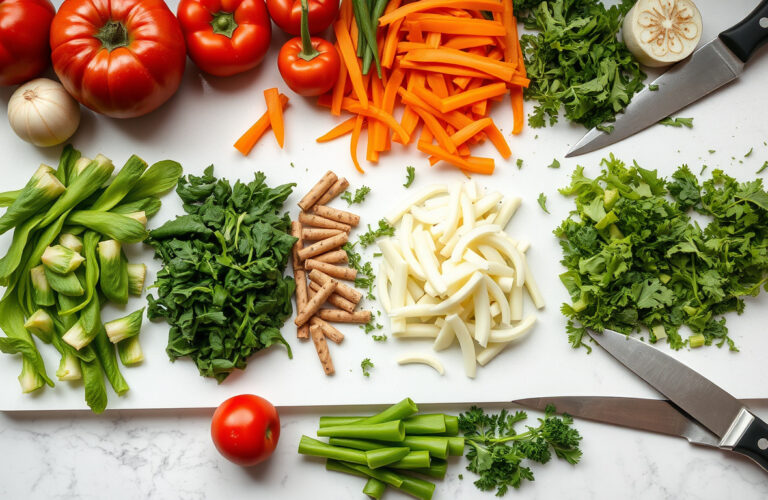
Why Uniform Knife Cuts Matter in Cooking
Ever wonder why restaurant dishes
look and taste so perfect?
The secret lies in uniform knife cuts.
How you prep your ingredients
changes everything.
It affects the flavor, texture,
and how evenly your food cooks.
Mastering this basic culinary skill
will instantly elevate your home cooking.
Key Benefits of Even Cutting
Cutting your ingredients to the same size
gives you three major advantages:
Even Cooking: All pieces finish cooking at the exact same time. No more burnt edges or raw centers.
Balanced Flavor: Every single bite delivers the perfect mix of ingredients.
Professional Presentation: Your homemade meals will look visually stunning, just like a gourmet restaurant dish.
Essential Knife Skills for Beginners
Achieving perfectly even ingredient sizes
is easier than you think.
Follow these essential meal prep tips:
Create a Flat Base: Slice a thin piece off your vegetable first. This stops it from rolling on the cutting board.
Use the “Claw Grip”: Curl your fingertips inward to hold the food. This protects your fingers and stabilizes the ingredient.
Maintain Consistent Speed: Take your time. Rushing leads to uneven slices and accidents.
Upgrade Your Culinary Skills Today
Perfecting your cutting technique
is the fastest way to cook like a pro.
With a little practice,
your meal prep will be faster,
safer, and much more rewarding.
Grab your chef’s knife
and start practicing today!
Why Cutting Ingredients Uniformly Matters
Even Cooking and Flavor
When ingredients are cut to similar sizes, they cook evenly. This means that each piece reaches the desired doneness at the same time, preventing situations where some pieces are raw while others are overcooked. For instance, in a vegetable stir-fry or soup, uneven cuts can cause smaller pieces to overcook and become mushy while larger ones remain tough.
Texture and Mouthfeel
Cut size also affects the texture and mouthfeel of your dish. Precise cuts help control how ingredients retain their structure throughout cooking, lending a balanced and enjoyable bite. When vegetables or proteins are diced uniformly, you get a harmonious blend of textures.
Visual Appeal and Presentation
Consistent cuts lend a polished, professional appearance to your dishes. Uniform pieces look tidy on the plate, enhancing the overall dining experience. This focus on presentation is especially important when serving guests, but it also elevates everyday meals.
Efficiency and Safety
Learning how to cut ingredients uniformly improves your knife skills, which in turn enhances kitchen efficiency and safety. Proper techniques reduce the likelihood of slips and accidents and speed up your food preparation.
Essential Knife Cuts for Uniform Ingredients
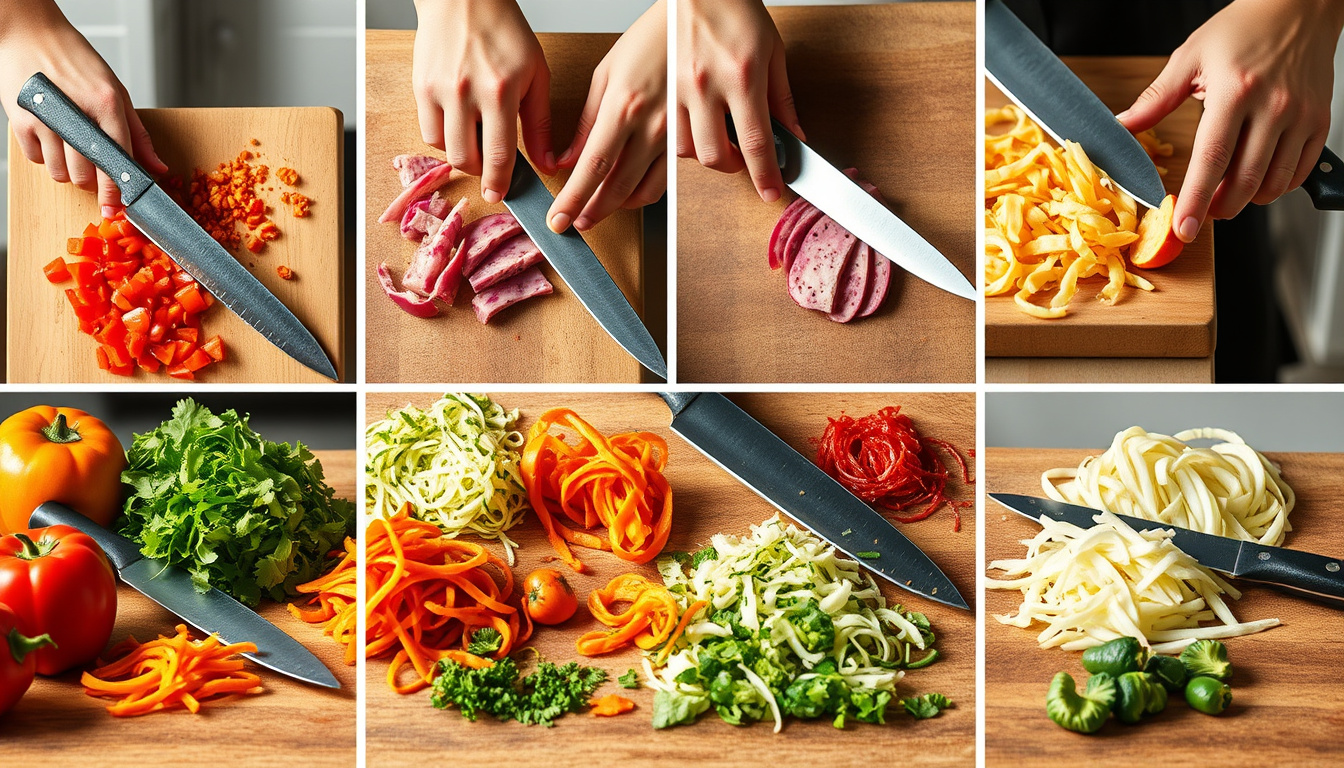
Mastering a set of basic knife cuts will help you achieve uniformity with practice. These cuts vary in size and shape, tailored to different culinary needs:
1. Chop
- Description: Rough, irregular cuts into bite-sized pieces, typically between ½ to ¾ inches.
- Use: Suitable for vegetables like bell peppers, onions, and potatoes in stews or stir-fries where precise sizing isn’t critical but even cooking is desired.
2. Dice
- Description: Small, uniform cubes, precise and consistent in size.
- Typical sizes: Small dice (~¼ inch), medium dice (~½ inch).
- Use: Perfect for salsas, salads, and classic mirepoix (a mix of onions, carrots, and celery).
3. Mince
- Description: Very fine, tiny pieces (less than ⅛ inch), often used for aromatics.
- Use: Garlic, ginger, onions, and herbs to distribute flavor evenly in dishes.
4. Julienne (French Cut)
- Description: Long, thin strips about ⅛ inch thick and 2 to 3 inches long, resembling matchsticks.
- Use: Ideal for salads, garnishes, and stir-fries with vegetables like carrots, bell peppers, or zucchini.
5. Brunoise
- Description: Tiny, precise cubes approximately 1/8 inch on each side.
- Process: Typically involves first julienning the vegetable, then dicing across the strips.
- Use: Garnishes, sauces, and dishes needing fine texture without overpowering flavor, often with carrots, celery, and onions.
6. Batonnet
- Description: Stick-shaped cuts about ¼ inch thick and 2-3 inches long.
- Use: Often a preparatory step for dicing or great as crudités or for fries.
7. Chiffonade
- Description: Thin ribbons typically used for leafy herbs and greens.
- Technique: Leaves are stacked, rolled tightly, then sliced crosswise.
- Use: Basil, mint, spinach, or kale garnishes.
8. Slice
- Description: Evenly thin pieces, often ⅛ to ¼ inch thick.
- Use: Fruits like tomatoes or cucumbers, and vegetables for salads or sandwiches.
9. Rondelle
- Description: Round slices from cylindrical vegetables like carrots or zucchini.
- Thickness: Typically ⅛ to ¼ inch.
- Use: Soups, stews, salads.
10. Lyonnaise Cut
- Description: Thin, half-moon shaped onion slices around ¼ inch thick.
- Use: Caramelizing onions or in salads.
Tips for Cutting Ingredients Uniformly
Use the Right Knife
A sharp, well-maintained chef’s knife is the most versatile tool for most cuts. Paring knives are useful for delicate tasks like chiffonade or slicing small fruits. Always choose a knife size and type suited to the task to improve control and precision.
Prepare a Stable Cutting Surface
A steady cutting board prevents slipping and accidents. Use a damp cloth underneath the board to keep it in place.
Create a Flat Surface on Round Vegetables
To prevent rolling, slice a thin piece off one side of round vegetables (like onions or cucumbers) to create a stable base before cutting.
Use Consistent Cutting Motions
Practice slicing in smooth, even strokes rather than chopping randomly. For example, in julienne or dice, keep your cuts steady and measure visually or use your knife’s width as a guide.
Practice Mise en Place
Organize and prep all ingredients ahead of cooking. Preparing uniform cuts during this stage streamlines cooking and improves both flavor consistency and presentation.
Safety Considerations
- Knife Grip: Hold the knife firmly with a proper grip — pinch the blade between your thumb and forefinger with the rest of the fingers wrapped around the handle.
- Claw Grip: Use your non-dominant hand to hold the ingredient with fingertips curled inward, protecting them from the blade.
- Cut Away From Your Body: Always cut away, not toward yourself.
- Keep Knives Sharp: A dull blade requires more force and increases the chance of slipping.
Conclusion
Cutting ingredients uniformly is a skill that blends art and science. It ensures your food cooks evenly, looks appealing, and tastes balanced. By mastering fundamental knife techniques — such as chopping, dicing, julienning, and chiffonading — and practicing safety and precision, you’ll create dishes that impress both visually and gastronomically. Start with simple cuts and gradually work your way up to more intricate techniques like brunoise and batonnet. With time and patience, uniform ingredient cutting will become second nature, transforming your cooking and dining experiences.
Mastering your knife skills today means consistently delivering perfectly cooked meals tomorrow.