Mandy Croft
## How to Add Broth Without Clumps
Want smooth, velvety sauces?
Learn how to mix liquids properly.
Avoid annoying flour lumps easily.
Create professional soups at home.
## Why Smooth Texture Matters
Lumps ruin great dishes.
Smooth sauces elevate your cooking.
The secret is adding broth slowly.
This unlocks a perfect texture.
It transforms ordinary meals completely.
Why Do Clumps Form When Adding Broth?
Clumps typically form when a thickening agent (such as flour, cornstarch, or powdered soup base) comes into contact with a large amount of liquid all at once. The starch molecules or proteins rapidly swell and stick together instead of dispersing evenly throughout the liquid. This causes lumps to form, resulting in a sauce or soup with uneven texture and an unappetizing appearance.
This problem often occurs due to:
- Adding broth too quickly to dry ingredients.
- Adding cold broth directly to hot thickening mixtures, causing the starches to seize.
- Inadequate stirring during the incorporation process.
Step-by-Step Guide to Adding Broth Slowly and Avoiding Clumps
1. Prepare Your Thickening Agent or Base First
Begin by mixing your thickening agent (flour, cornstarch, or dry soup mix) with a small amount of cold liquid—either water or broth—to make a smooth slurry or paste. This initial step ensures the starches are evenly hydrated and less likely to clump.
Tip: Use a whisk or fork to break up any lumps during this stage.
2. Warm Your Broth Before Adding
Warming the broth slightly before adding it to your mixture helps it integrate better. Adding cold broth directly to a hot mixture can cause the starch to seize and clump.
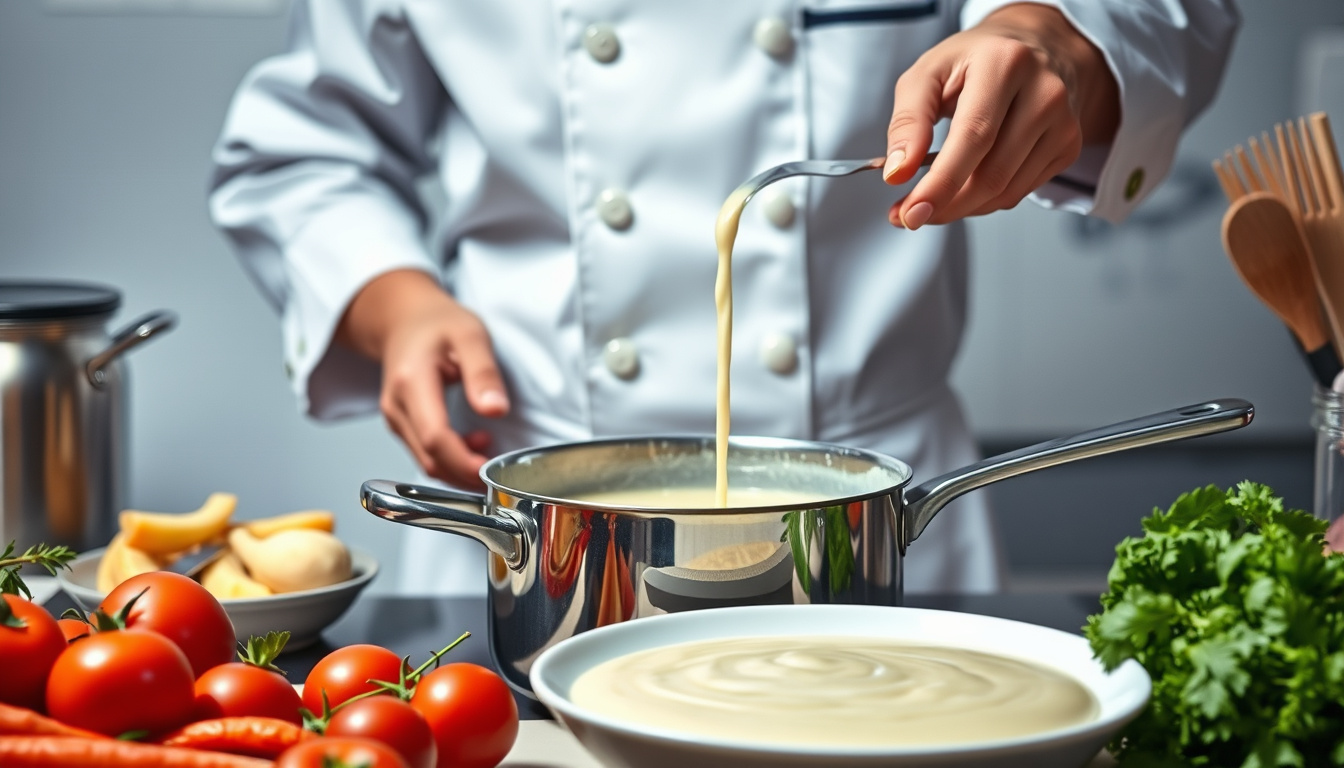
3. Add the Broth in Small, Gradual Amounts
Instead of pouring all the broth at once, slowly drizzle or add it in increments while stirring vigorously. This gradual incorporation allows the starch molecules to swell evenly without forming clumps.
For example:
- Start with about 1/4 cup of broth and whisk until smooth.
- Add another small amount and continue whisking.
- Repeat until all the broth is fully incorporated.
4. Stir Continuously and Use the Right Tool
Use a whisk or a wooden spoon to stir briskly and constantly during the addition of broth. This prevents the thickening agent from settling and forming lumps.
5. Adjust Heat Appropriately
Keep the mixture over moderate heat. Too high heat too soon may cause rapid thickening and clumping; too low heat can make the mixture settle unevenly.
Once combined, bring the mixture to a gentle simmer to allow the sauce or soup to thicken fully and cook out any raw starch flavor.
Additional Tips and Tricks
- Make a Roux First: If the recipe calls for flour, consider making a roux by cooking the flour with butter or oil before adding broth. This pre-cooks the starch and reduces clumping.
- Use a Strainer if Needed: If clumps form despite your precautions, pour the sauce through a fine mesh strainer to remove lumps for a smooth finish.
- Cornstarch Slurry: For cornstarch, create a slurry by mixing cornstarch with cold water first, then add this slurry slowly into warm broth.
- Temperature Matters: Always try to keep liquid temperatures as consistent as possible to avoid shocking starches.
Conclusion
Mastering the technique of adding broth slowly and carefully is essential for creating smooth, lump-free sauces and soups. By preparing your thickening agents correctly, warming your liquids, adding slowly while stirring vigorously, and managing heat properly, you can avoid frustrating clumps and achieve a professional-quality texture. Developing this skill not only improves your cooking outcomes but also builds confidence in the kitchen—making your meals more enjoyable and visually appealing. Practice these steps, and soon you’ll effortlessly create silky and delicious sauces every time.