Mandy Croft
## Why Cook with Wine? Boost Your Everyday Meals
Cooking with wine is a classic kitchen secret.
It adds rich complexity and depth.
It brings elegance to your home cooking.
The right wine transforms simple ingredients into memorable dishes.
You can create amazing meals easily.
* Pan sauces become rich and glossy.
* Slow-braised stews get deep, savory flavors.
* Seafood dishes stay delicate and fresh.
——————————
## The Secret to Cooking with Wine
Not all wines work well in food.
Choosing the right bottle makes all the difference.
## 1. Enhance the Flavor
Wine balances the fat in your food.
The natural sugars caramelize during cooking.
This creates a deeper flavor profile.
## 2. Tenderize the Meat
The natural acids break down tough fibers.
This makes your meat incredibly tender.
It is perfect for slow-cooked stews.
## 3. Add Aroma
Wine releases beautiful scents as it simmers.
It makes your kitchen smell like a restaurant.
——————————
## Quick Culinary Wine Tips
* Never cook with wine you wouldn’t drink. Bad wine ruins good food.
* Let the alcohol burn off. Simmer the liquid to mellow the sharp taste.
* Match the color. Use white wine for chicken and red wine for beef.
Why Use Wine in Cooking?
Wine adds acidity, moisture, and rich flavor profiles that can brighten, tenderize, or deepen your dish. When wine reduces during cooking, its flavors concentrate and meld beautifully with other ingredients, while the harshness of alcohol cooks away. This process results in a subtle yet impactful enhancement of your food’s taste and aroma.
Choosing the Right Wine for Cooking
A key rule to remember is use a wine you’d gladly drink. Avoid “cooking wine” products that contain salt and preservatives, as these can impart unpleasant flavors. Instead, select a decent bottle of wine with flavor characteristics that complement your dish.
Red Wines
- Best for hearty meals featuring beef, lamb, pork, or game.
- Choose dry, full-bodied reds with moderate tannins such as Cabernet Sauvignon, Merlot, Shiraz, or lighter options like Pinot Noir.
- Reds work well in long braises and stews where their boldness can stand up to rich, fatty ingredients.
- Be mindful: extended cooking can mellow tannins and bitterness but also concentrate flavors, so balance is key.
White Wines
- Ideal for poultry, seafood, and creamy dishes.
- Opt for dry, crisp whites like Sauvignon Blanc, Pinot Grigio, Pinot Gris, or unoaked Chardonnay.
- White wines bring bright acidity, which acts like a gentle squeeze of lemon to lift flavors and cut richness.
- They tolerate longer cooking better than reds without becoming bitter or overpowering.
Fortified Wines
- Include Sherry, Marsala, Port, and Madeira.
- Great for adding complexity to both savory dishes and desserts.
- Use sparingly (usually less than half a cup), cooking them down briefly to integrate their assertive flavors.
- Dry versions suit savory recipes; sweet versions pair nicely in desserts like panna cotta or zabaglione.
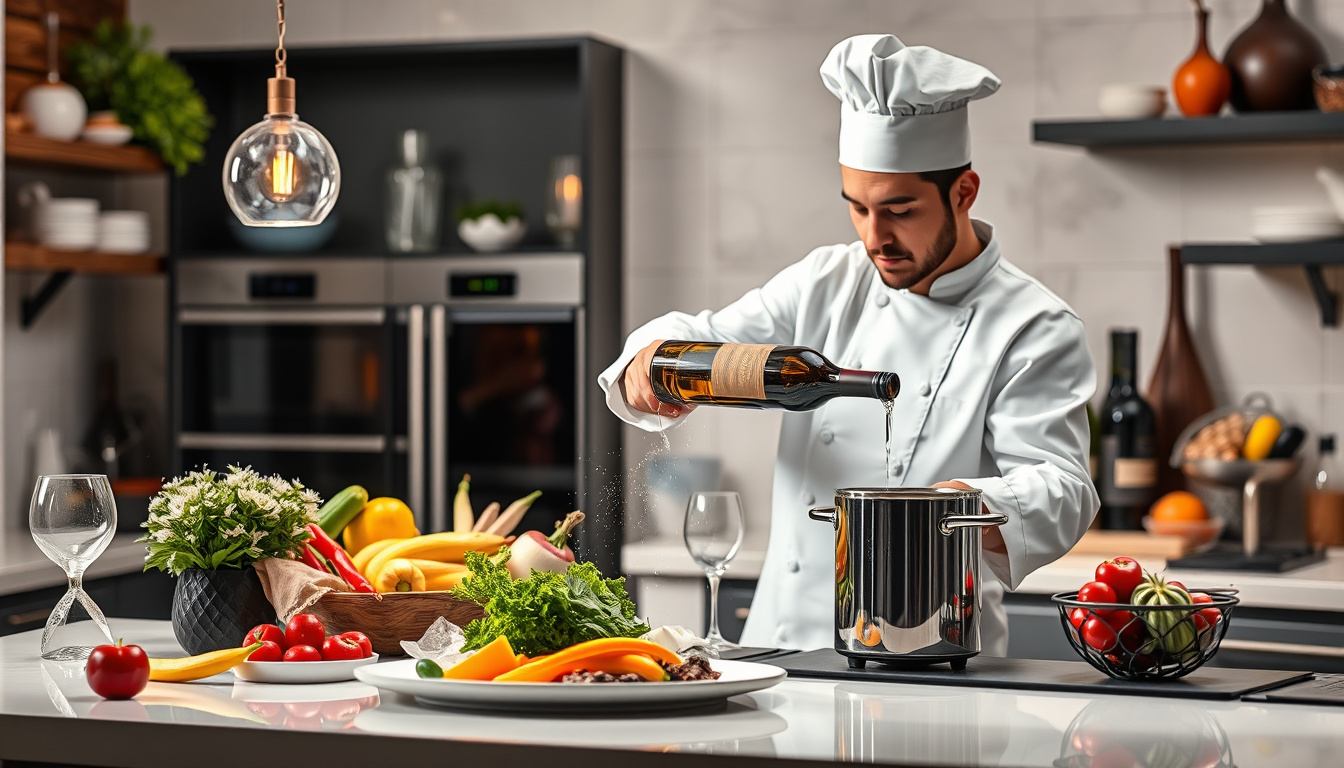
Techniques for Cooking with Wine
1. Deglazing
After sautéing or searing, pour a splash of wine into the hot pan to loosen the flavorful browned bits (fond). Reducing this helps create a rich base for sauces.
2. Braising & Stewing
Use wine as part of the cooking liquid for dishes requiring slow, gentle heat, such as beef bourguignon or coq au vin. The wine tenderizes meat and infuses the dish with layered, complex notes.
3. Marinades
Wine’s natural acidity helps break down proteins, making meat tender while adding subtle flavor nuances before cooking.
4. Sauces & Soups
Incorporate wine into gravies, cream sauces, or tomato-based soups for an extra depth and brightness.
5. Poaching & Steaming
Simmer fruits, fish, or eggs gently in wine to impart delicate aromas. Add wine to steaming liquids for shellfish or vegetables to enhance their natural flavors.
Practical Tips for Cooking with Wine
- Add wine early enough in the cooking process to allow alcohol to burn off, leaving behind concentrated flavors without bitterness.
- Use less is more as a rule of thumb—most recipes call for about 4 ounces (120 mL) or less of wine.
- Freeze leftover wine in ice cube trays to preserve it for future cooking uses and prevent waste.
- Match wine to the dish you’d pair it with for drinking—light wines with subtle dishes, bolder wines with rich or meaty meals.
- If wine runs out, you can substitute with diluted vinegar (red or white wine vinegar), fruit juices, or stock, though flavor nuances will vary.
What to Avoid
- Don’t use wines that are overly sweet, oxidized, or vinegary, as they can spoil your dish.
- Avoid fine, expensive vintages for cooking since extended heat diminishes their delicate complexity.
Final Thoughts
Cooking with wine is an accessible way to elevate your culinary creations. By choosing the right style of wine, applying it with intention, and respecting its flavor characteristics, you can transform simple recipes into plates bursting with warmth, brightness, and sophistication. So, next time you’re in the kitchen, don’t hesitate to splash a little wine in your pot—you might just discover a new favorite technique that enhances every bite. Cheers to delicious cooking!