Mandy Croft
## The Secret to Perfect Stir-Fry Eggs
Stir-frying is incredibly fast.
It brings out amazing flavors.
Even beginners can do it.
Want perfect egg fried rice?
There is one crucial secret:
Cook eggs separately first.
Do not mix them early.
Remove them from the pan.
Add them back at the end.
Why does this step matter?
How does it elevate your dish?
Let’s dive into the cooking science.
The Role of Eggs in Stir-Frying
Eggs are often the star ingredient in many stir-fry dishes because they add protein, richness, and a delicate texture that balances other components. However, the way the eggs are cooked and incorporated has a major impact on the final dish’s texture and flavor.
Traditionally, some recipes instruct cooks to crack eggs directly into the stir-fry pan and scramble them amidst other ingredients. While this can work, it often results in eggs that are unevenly cooked, sometimes overcooked or rubbery, and can cause the rice or vegetables to clump or become mushy. This is especially noticeable in dishes like egg fried rice, where the interplay between tender eggs and fluffy rice is essential.
Why Separate Eggs Before Adding Them?
1. Textural Control
One of the key advantages of separating eggs from other stir-fry ingredients is gaining precise control over their texture. When you beat and cook eggs separately:
- Fluffy curds and tender bits form as the heat gently cooks the eggs on a preheated surface.
- You avoid overcooking, which can make eggs tough or rubbery.
- You can create delicate pieces of egg that mix harmoniously with other components rather than turning into dense clumps.
Kenji López-Alt, culinary expert and author, emphasizes that cooking eggs before adding rice or vegetables allows delicate fluffy curds to develop, which then can be broken into variable-sized pieces to suit preference. This technique also prevents the eggs from sticking and burning on high-heat stir-frying.
2. Prevents Clumping
By separately cooking eggs, the risk of rice or other ingredients clumping together decreases. Adding uncooked eggs directly into the wok with rice or vegetables can cause the rice grains to stick and aggregate due to moisture released from the raw eggs cooking simultaneously. Separating eggs reduces this excess moisture interaction early on.
3. Better Flavor Development (Wok Hei)
In Chinese stir-fry cooking, a coveted flavor known as wok hei—the “breath of the wok”—refers to the subtle smoky, charred taste imparted by cooking food at very high heat. Pre-cooking eggs allows you to control their contribution to wok hei carefully:
- Eggs can lightly brown and develop flavor complexity.
- When eggs are folded back into the rice or vegetables and stir-fried together, tiny droplets of oil combust, creating the signature smoky aroma.
In contrast, scrambling eggs directly into the stir-fry often cooks them too quickly, missing this layer of flavor development.
Step-by-Step Guide to Separating and Cooking Eggs for Stir-Fry
Drawing from expert advice and kitchen-tested methods, here is a practical approach:
Step 1: Prepare Ingredients
- Beat the eggs lightly in a bowl until blended.
- Break up any clumps of your main stir-fry ingredient (e.g., leftover rice) to ensure even cooking.
- Have all other components such as scallions, soy sauce, and oil prepped and within easy reach.
Step 2: Preheat the Pan or Wok
- Heat a carbon steel or nonstick pan on high until very hot.
- Add neutral cooking oil (e.g., canola, peanut, or rice bran oil).
- A properly preheated pan ensures a slick surface that prevents sticking and enables proper browning.
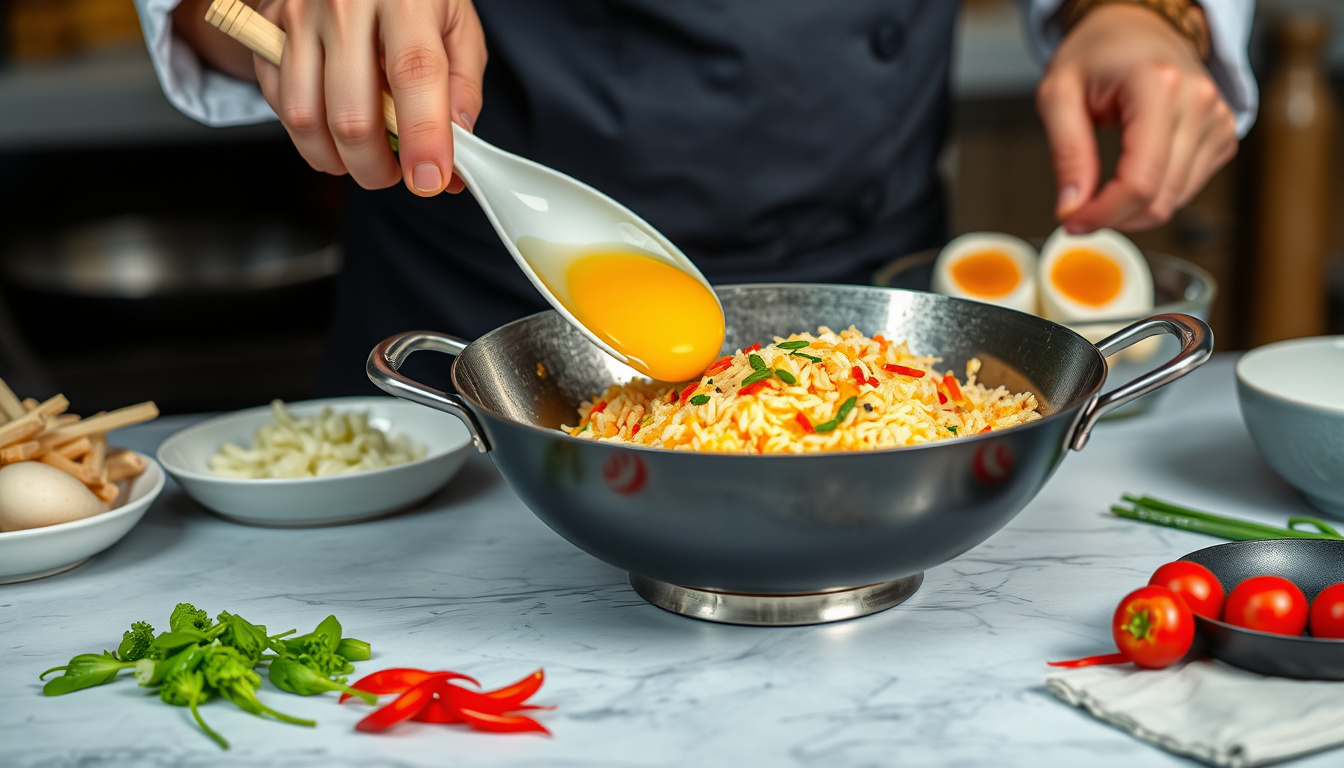
Step 3: Cook the Eggs Separately
- Remove the pan from direct heat or reduce heat to low to avoid scorching.
- Pour the beaten eggs into the oil in the pan.
- Allow the eggs to puff and gently brown on one side without stirring immediately.
- Flip the eggs into a semi-omelet shape within about 15 seconds to set the texture.
- You may break apart the eggs into chunks or smaller curds, depending on your preference.
Step 4: Add Other Ingredients
- Push the cooked egg up the side of the pan.
- Add more oil if needed and introduce main ingredients such as rice or vegetables.
- Initially keep the heat low so the eggs don’t burn as you combine ingredients.
- Once combined, turn the heat back up to high to initiate traditional stir-frying.
Step 5: Stir-Fry Together
- Flip the cooked egg onto the rice or vegetables.
- Toss and stir vigorously to incorporate the eggs evenly.
- Continue cooking until ingredients show signs of wok hei: individual grains of rice “jumping” or lightly charred aromatics.
Step 6: Season and Finish
- Season with soy sauce, added slowly around the edge of the wok to help it reduce without burning.
- Toss in aromatics like scallions at the very end for freshness.
- Stir briefly in residual heat before serving.
Conclusion
Separating and pre-cooking eggs before adding them to your stir-fry is a simple yet transformative technique. This method grants enhanced control over egg texture, prevents clumping, and contributes to deeper, more complex flavors associated with expert-level stir-frying. Whether you’re crafting classic egg fried rice or incorporating eggs into vibrant vegetable stir-fries, adopting this practice brings your cooking closer to professional standards.
Next time you reach for the eggs in your stir-fry recipe, give separation a try—your taste buds will thank you.
References
- López-Alt, J. Kenji. Perfect Egg Fried Rice (On Whatever Gear You Have), Serious Eats.
- Discussions and tips on Reddit cooking communities about egg stir-frying techniques.
- General culinary principles from wok cooking experts on achieving wok hei and ideal egg texture.
By mastering the art of separating and properly cooking eggs before adding them to your stir-fry, you’re taking an essential step toward perfecting a foundational and beloved dish in Asian-inspired cuisine.