Mandy Croft
A wok is much more than just a cooking vessel—it’s a culinary tool that, with proper care, can significantly elevate the flavors and textures of your dishes. One key practice that every wok owner should embrace is regular seasoning. Seasoning not only protects your wok but also develops its distinctive nonstick surface and enhances the essence of Asian cooking, known as wok hei. In this article, we’ll delve into why you should season your wok regularly and how to do it effectively for lasting culinary excellence.

Why Seasoning Your Wok Matters
Seasoning a wok, especially when made from carbon steel or cast iron, is essential for several reasons:
1. Prevents Rust
Carbon steel and cast iron woks are prone to rusting when exposed to moisture. Seasoning creates a protective layer by bonding oil to the metal surface through heat, preventing direct exposure to air and moisture and thus forestalling rust formation.
2. Develops a Natural Nonstick Surface
Repeated seasoning and cooking build up a layer called a patina—a dark, slick surface that improves with use. This natural nonstick coating reduces food from sticking to the wok, making cooking and cleaning easier.
3. Enhances Flavor Through “Wok Hei”
A properly seasoned wok contributes to creating wok hei, or “the breath of the wok”—a unique smoky, savory aroma and charred flavor prized in Asian cuisine. The right patina allows heat to distribute evenly, helping achieve this coveted flavor.
4. Extends the Wok’s Lifespan
With regular seasoning and proper care, a wok can last for generations, becoming a valuable kitchen heirloom steeped in personal history and flavor memories.
How Often Should You Season Your Wok?
A new carbon steel or cast iron wok requires an initial thorough seasoning to establish the protective layer and remove factory oils and rust-preventive coatings. After that:
- You don’t need to season your wok before every use. Regular cooking, especially stir-frying with oil and at high heat, continues to build and maintain the seasoning naturally.
- It’s important to season your wok after each use by wiping it with a thin coating of oil once cleaned and dried to maintain the patina and prevent rust.
- Re-season your wok whenever the patina wears down, or if you notice rust or food begins to stick again, which may happen after cooking acidic foods or using harsh cleaner.
In summary, regular use combined with a light oiling after each clean is sufficient maintenance, but periodic deeper seasoning sessions are recommended for long-term upkeep.
How to Season Your Wok: A Step-by-Step Guide
Here’s a consolidated, effective method tailored for carbon steel or cast iron woks, based on expert practices:
Materials Needed:
- New or unseasoned carbon steel or cast iron wok
- Dish soap and scrubbing pad or wok brush
- High smoke point oil (e.g., peanut oil, grapeseed oil, vegetable oil)
- Aromatics (optional but beneficial): sliced ginger and chopped scallions or garlic chives
- Paper towels or clean kitchen cloth
Initial Seasoning Steps:
-
Clean the Wok Thoroughly
Scrub the wok with dish soap and a scouring pad to remove factory oils and any residue. Rinse and dry it briefly. -
Heat the Wok to Evaporate Moisture
Place the wok over medium to high heat until dry and slightly smoking. You may observe color changes such as bluish or dark hues—that’s normal. -
Add Oil and Aromatics
Pour 2 tablespoons of your chosen oil and spread it evenly over the entire cooking surface. Drop in sliced ginger and scallions, gently stir them to spread oil and infuse scent, and allow them to char lightly. -
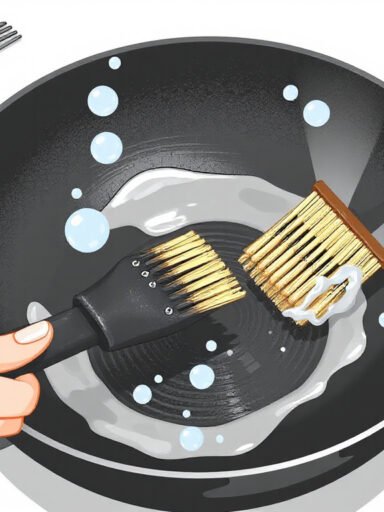
Remove Aromatics and Clean
Discard the aromatics, then rinse the wok with hot water. Use a wok brush or scrubbing pad (no soap) to remove residual bits. -
Dry and Oil Again
Heat the wok over medium heat until dry. Once cooled enough to handle, apply a thin layer of oil with a paper towel, spreading it evenly to create a uniform coating.
This process may be repeated a few times during the first seasoning session to build a solid base.
Daily Care and Maintenance Tips
To keep your wok in prime condition between cooking sessions:
-
Clean Immediately After Use
Avoid soaking the wok to prevent rust. For light meals, rinse with hot water and use a brush or spatula to remove residues. For oilier or heavier dishes, a mild soap wash may be necessary. -
Dry Thoroughly and Reheat
After washing, dry with a towel and then heat the wok on the stove to evaporate any moisture invisible to the eye. -
Oil the Surface Lightly
Once dry and slightly cooled, wipe the interior with a small amount of oil using a paper towel to maintain the patina. -
Avoid Cooking Acidic Foods Early On
Ingredients like tomatoes or vinegar can strip the seasoning when your wok is newly seasoned. Wait until the patina is well-established to include these ingredients. -
Re-season as Needed
If rust spots appear or food begins to stick excessively, repeat the seasoning process or perform a thorough clean and reseason.
Special Notes for Stainless Steel Woks
Unlike carbon steel or cast iron, stainless steel woks don’t require seasoning because they lack the porous surface needed for oil polymerization. They benefit more from heat conditioning:
- Heat the wok until water droplets sizzle and evaporate.
- Add oil to coat the surface right before cooking.
- Clean with soap after each use.
Conclusion
Regular seasoning transforms a bare carbon steel or cast iron wok into a treasured cooking companion that delivers exceptional flavor and performance. By investing some time in seasoning and routine care, you protect your wok from rust, enhance its natural nonstick quality, and unlock the authentic wok hei that defines great stir-fry cooking. Embrace the art of seasoning to master your wok and bring out the best in every dish you create.
Happy cooking and enjoy the rich flavors only a well-seasoned wok can bring!